If you’re planning to cross the Alps by train and want the most visually rewarding route, the Bernina Express offers the most scenic train ride from Italy to Switzerland. It’s not only stunning but also a practical and well-connected cross-border journey.
Below, we’ll explain what makes it the top choice, how it compares to other scenic options, and what you need to know to plan your trip efficiently.
Why Is the Bernina Express Considered the Most Scenic Route from Italy to Switzerland?
The Bernina Express offers unmatched panoramic views of alpine landscapes
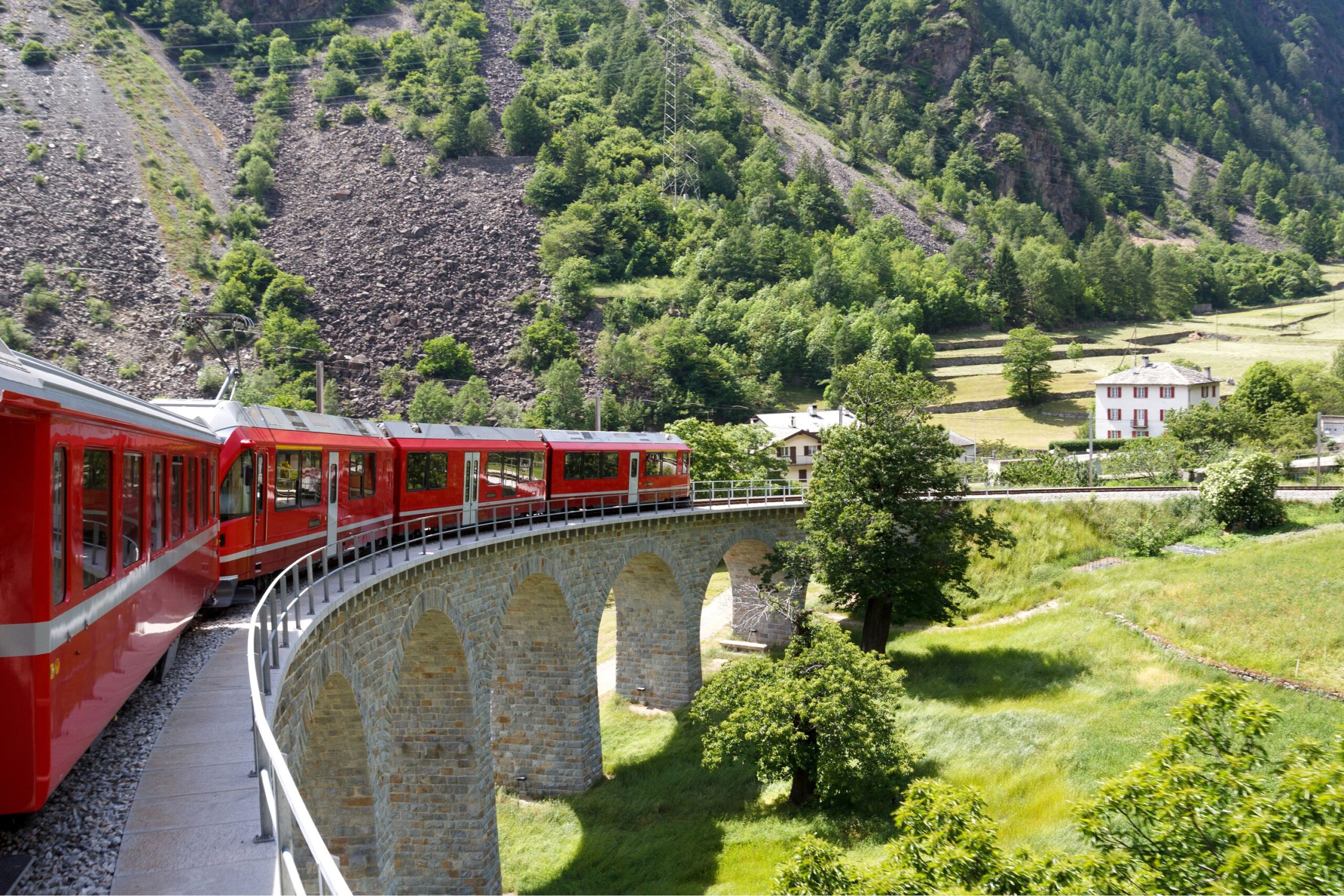
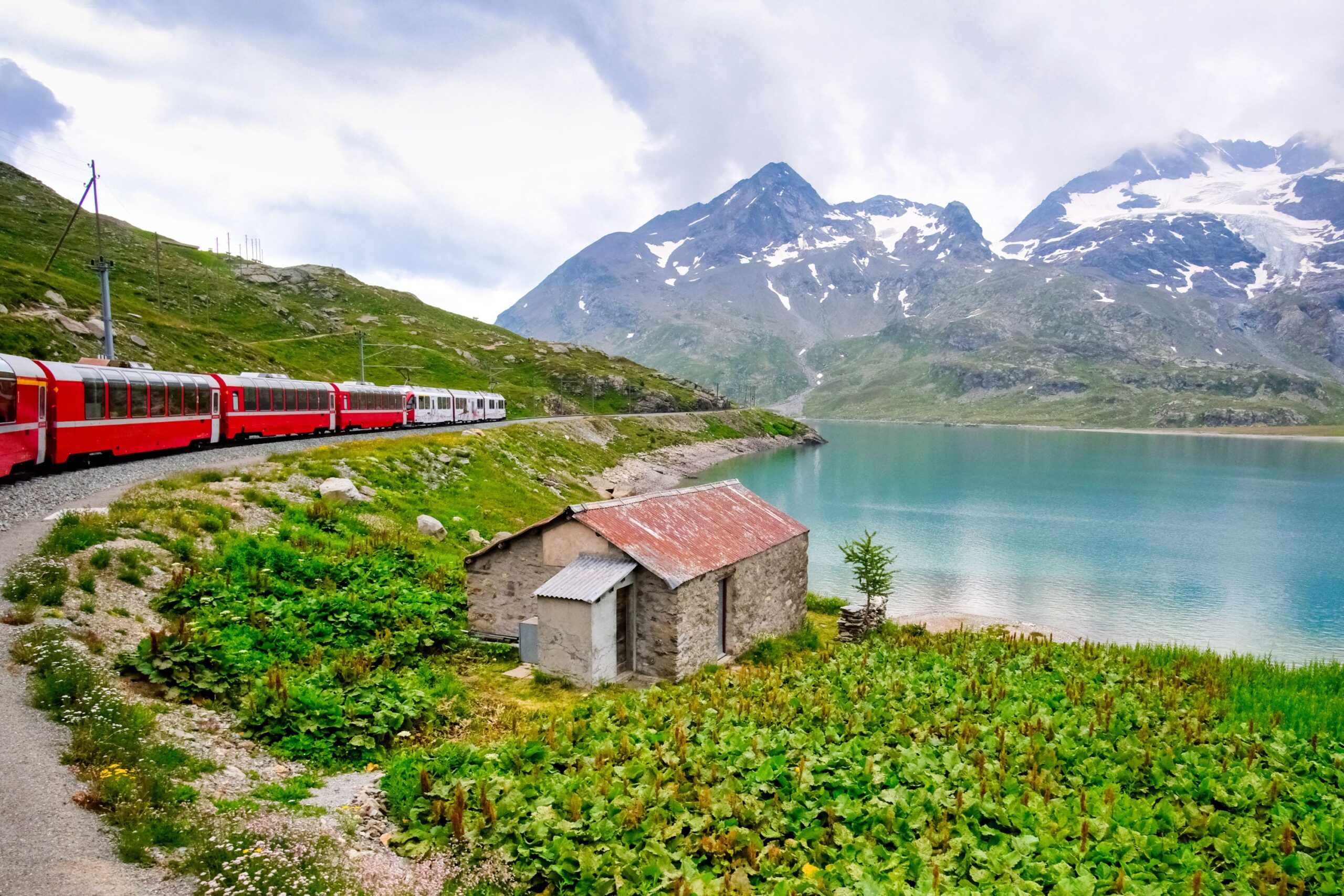
The Bernina Express is widely regarded as the most scenic train ride from Italy to Switzerland because it travels through UNESCO-listed railway sections, crosses the 3124-meter-high Bernina Pass, and connects Tirano (Italy) to Chur (Switzerland) without needing a passport check.
What makes it scenic:
- Crosses 196 bridges and passes through 55 tunnels
- Features landmarks like the Landwasser Viaduct, Alp Grüm, and Morteratsch Glacier
- Offers panoramic train cars with large windows designed for sightseeing
- Operates year-round, offering completely different but equally stunning views in summer and winter
Where Does the Bernina Express Depart and Arrive?
The train starts in Italy and ends in eastern Switzerland, with practical connections.
The official route begins in Tirano, Italy, and ends in Chur, Switzerland. It passes through Poschiavo, Alp Grüm, Ospizio Bernina, Pontresina, and St. Moritz. You can easily reach Tirano from Milan by regular Trenord trains (about 2h 30m, direct).
Route overview:
- Start: Tirano (Italy)
- End: Chur (Switzerland)
- Key stops: St. Moritz, Pontresina, Poschiavo, Landwasser Viaduct
Chur is Switzerland’s oldest city and has connections to Zurich and beyond.
How Much Does the Bernina Express Cost and How to Book?
Expect additional seat reservations on top of the base fare
The Bernina Express is part of the regular Swiss rail system, so you can use a Swiss Travel Pass or buy point-to-point tickets. However, seat reservations are compulsory on the panoramic Bernina Express carriages.
Cost breakdown:
- Tirano to Chur fare: Around CHF 63–CHF 90 one-way (depending on class)
- Seat reservation fee: CHF 20 (winter) to CHF 26 (summer)
- Booking platforms: RHB.ch, Omio, Trainline
Booking tip: You can ride the same route on regional trains (called Regio) without a seat reservation, for less money and more flexibility, though windows are smaller.
How Long Does the Bernina Express Take?
The journey covers about 4 hours with no passport checks
The Tirano to Chur leg takes just under 4 hours, covering 122 kilometers. It’s a slow ride because it climbs steep gradients and stops frequently to let passengers enjoy the views.
Travel duration:
- Tirano to St. Moritz: ~2h 30m
- St. Moritz to Chur: ~2h
- Total: ~4h 10m
Are There Other Scenic Train Routes from Italy to Switzerland?
Yes—but none match the altitude and diversity of the Bernina Express
Here are three alternatives to consider:
- Glacier Express (Zermatt to St. Moritz)
- Not a cross-border route, but often paired with Bernina
- Known as the “slowest express train in the world”
- Runs within Switzerland, ideal if continuing travel within the country
- Not a cross-border route, but often paired with Bernina
- Simplon Pass via Milan to Brig to Geneva
- Crosses into Switzerland through scenic valleys
- Not as visually intense as Bernina; better for efficiency than views
- Crosses into Switzerland through scenic valleys
- Gotthard Panorama Express (Lugano to Lucerne)
- Lake and mountain scenery with a boat-train combo
- Good choice for those starting in southern Switzerland or northern Italy
- Lake and mountain scenery with a boat-train combo
Final call: Bernina Express is the only route combining glacier views, viaducts, and high alpine passes all in one trip.
Can You Take Luggage, Bikes, or Pets on the Bernina Express?
Yes, but specific rules are depending on the service
- Luggage: Included in the fare; storage racks available onboard
- Bikes: Allowed only on regional trains, not on panoramic Bernina Express coaches
- Pets: Small dogs (under 30cm) travel free in carriers; others require a half-fare ticket
If traveling with bikes or without a reservation, take regular Rhaetian Railway trains along the same route.
What’s the Best Time of Year to Ride the Bernina Express?
Each season offers a unique scenic experience
- Winter (Dec–Mar): Snow-covered glaciers, frozen lakes, fewer tourists
- Spring (Apr–May): Melting snow, waterfalls, fewer crowds
- Summer (Jun–Aug): Lush valleys, clear skies, busiest season
- Fall (Sep–Oct): Colorful foliage, crisp air, excellent visibility
For the clearest mountain views, September is often the best month, stable weather and fewer crowds after peak summer.
Is the Bernina Express Included in Any Travel Passes?
Yes, the ride is covered, but you still need a seat reservation
Accepted passes:
- Swiss Travel Pass
- Interrail / Eurail Global Pass
- Regional Rätische Bahn passes
⚠️ Note: These cover the base fare but do not include the reservation fee for the panoramic train cars.
Final Recommendation: Who Should Choose the Bernina Express?
Best suited for travelers prioritizing scenic value over speed
Choose the Bernina Express if you:
- Want the most scenic route from Italy to Switzerland
- Prefer panoramic views over faster transfers
- Are you heading to or from Milan, Chur, or Zurich
- Enjoy relaxed train travel and photography
Avoid it if you’re short on time or need to reach major cities quickly. In that case, take faster connections via Milan–Lugano–Zurich.
FAQs
Can you do the Bernina Express as a day trip from Milan?
Yes, it’s possible. Take an early Trenord train from Milan to Tirano, ride the Bernina Express to St. Moritz, then return via the same route. It’s a full-day trip of 12–13 hours.
Is the Bernina Express worth the extra reservation fee?
If you want full panoramic windows and guaranteed seats during peak season, yes. Otherwise, regional trains on the same line offer the same views at a lower cost.
Do you need a passport for the Bernina Express?
No passport checks occur, but since it crosses borders, carry a valid passport or EU ID in case of random inspections.
Is the Bernina Express wheelchair accessible?
Yes, but you must book in advance through Rhaetian Railway to ensure assistance and space.
What’s the best direction to ride for scenery?
Most people recommend Tirano to Chur, as you ascend the Alps with increasing drama. Sit on the right side for best glacier views.