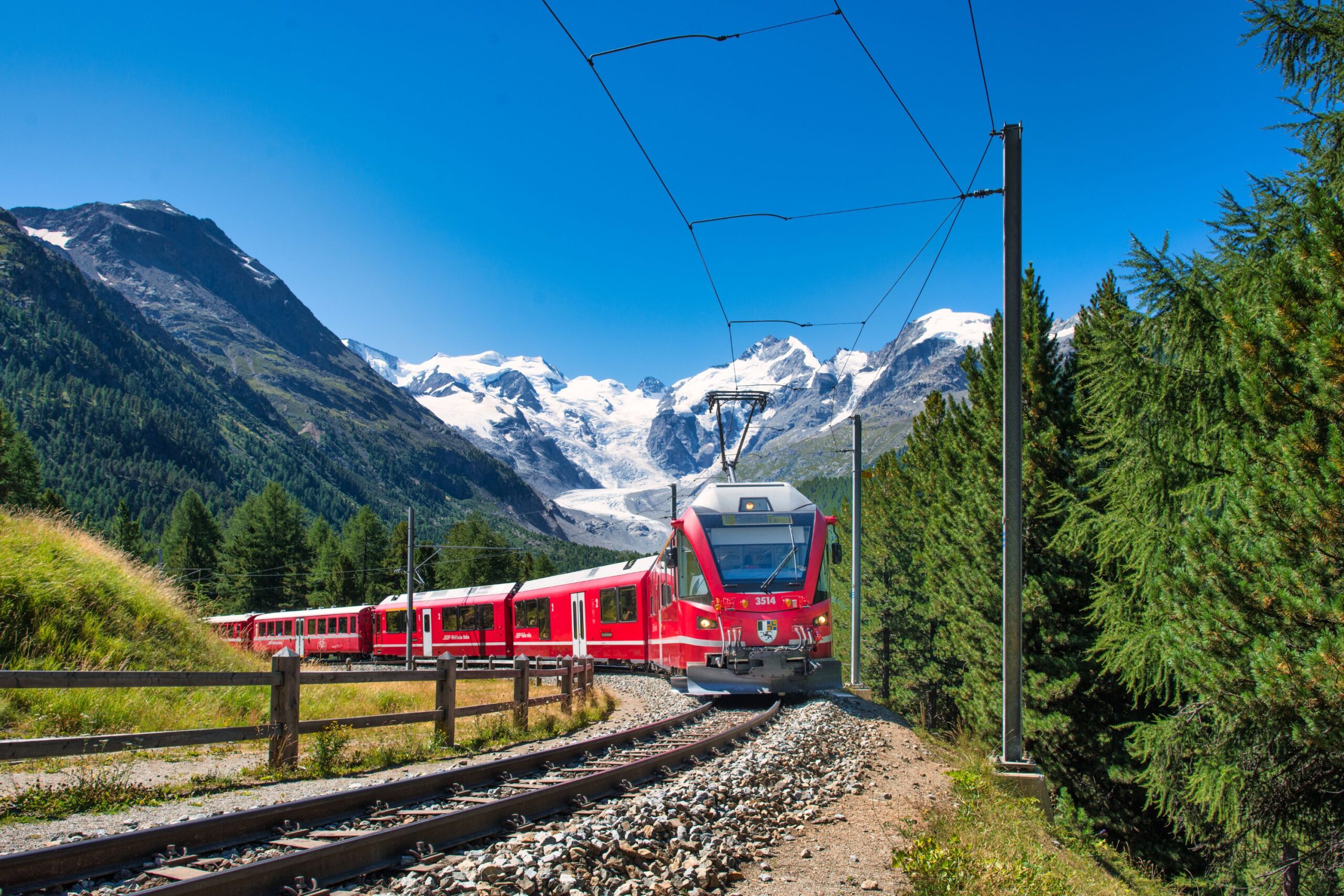
The most scenic train ride in France is widely considered to be the Train des Merveilles, a breathtaking journey that runs between Nice and Tende through the French Riviera’s hinterland and the Maritime Alps. This route combines mountain panoramas, medieval villages, and deep river valleys, showcasing southern France’s dramatic natural beauty in just a few hours.
Departing from the Nice-Ville station, the Train des Merveilles climbs nearly 1,000 meters above sea level, winding through tunnels and bridges built in the 1920s. Along the way, passengers can stop at picturesque towns like Peille, Breil-sur-Roya, Saorge, and La Brigue, each offering postcard-perfect views of the Roya Valley and the Italian border.
The train is part of the TER regional network, so it’s affordable and accessible, and it even offers free audio commentary in English and French about the landmarks during the summer months.
For travelers seeking other scenic train rides in France, a few more routes rival its charm: the Train Jaune (Yellow Train) in the Pyrenees offers stunning mountain landscapes; the Alsace Wine Route near Colmar reveals rolling vineyards; and the Mont Blanc Express connects France and Switzerland with alpine peaks and waterfalls that seem close enough to touch.
Choosing a scenic train ride in France depends on your taste – coastal glamour, alpine adventure, or rustic countryside – but the Train des Merveilles remains the most visually striking for its blend of Mediterranean light, high-altitude views, and authentic French charm.
Why Is the Train des Merveilles Considered France’s Most Scenic Rail Journey?
The Train des Merveilles is considered France’s most scenic rail journey because it travels through the Roya Valley, one of the most visually striking regions in the Alpes-Maritimes. Covering about two hours between Nice Ville and Tende, this train climbs over 1,000 meters in elevation, passing through diverse landscapes that transition from Mediterranean olive groves to alpine forests.
The constantly changing scenery, historic architecture, and mountain engineering make this ride an unmatched experience for travelers seeking authentic, natural beauty in southern France.
This route is more than a means of transport — it’s a living showcase of geography and culture. As the train winds along the steep valley, passengers see stone viaducts, terraced hillsides, and villages like Breil-sur-Roya, Saorge, and Fontan, all clinging to the mountainsides.
Each curve reveals another postcard view, where rivers shimmer below ancient bridges and cliffs rise dramatically above.
Unlike premium scenic lines such as the Glacier Express or Venice Simplon-Orient-Express, the Train des Merveilles is part of France’s TER regional network, meaning tickets are inexpensive and easy to book via SNCF Connect or directly at the station.
Despite its affordability, the journey feels exceptional — combining spectacular alpine views with a strong sense of regional identity.
The engineering behind the line also contributes to its fame. Built in the early 1900s, it includes 30 tunnels and multiple viaducts, designed to handle steep gradients and narrow passes.
These structures remain a marvel of early French railway construction, offering travelers both a historical perspective and panoramic beauty in one ride.
For visitors based on the French Riviera, the Train des Merveilles provides a convenient way to exchange sea views for mountains — all within a single morning.
It’s this blend of accessibility, history, and landscape that firmly establishes it as the most scenic train journey in France.
Where Does the Train des Merveilles Start and End?
The Train des Merveilles begins its journey at Nice Ville Station, located in the center of the French Riviera, and ends in Tende, a small mountain town close to the Italian border. The entire route takes around two hours each way, offering passengers a continuous panorama of changing landscapes — from the coast of Nice to the alpine peaks of the Roya Valley.
This makes it one of the few routes in France where travelers can experience both Mediterranean and Alpine scenery in a single ride.
Nice is an ideal departure point due to its strong transportation connections. The Nice Ville Station links easily to high-speed TGV trains, regional lines, and Nice Côte d’Azur Airport, located just a short tram ride away. This accessibility makes the scenic route possible even for day-trippers.
Many visitors plan a full-day itinerary: departing in the morning, exploring Tende for a few hours, then returning to Nice by evening.
At the other end of the line, Tende lies deep within the Mercantour National Park, one of France’s most ecologically diverse regions. It’s best known for the Vallée des Merveilles (“Valley of Wonders”), home to over 40,000 prehistoric rock carvings dating back to the Bronze Age.
The town itself offers charming alpine streets, traditional stone houses, and the Musée des Merveilles, which documents the valley’s archaeological discoveries.
Travelers arriving in Tende can continue exploring the park on marked hiking trails or on local buses that connect to nearby villages such as La Brigue and Saint-Dalmas-de-Tende.
Together, these destinations highlight the cultural and natural richness of the southern Alps, completing one of France’s most scenic and rewarding regional train routes.
What Can Travelers See Along the Way of Train des Marveilles?
Travelers on the Train des Merveilles experience one of the most visually diverse train rides in Europe.
The scenery changes rapidly as the train climbs from the Mediterranean coast into the French Alps — from palm trees and sea views to pine forests and rugged peaks.
This two-hour journey captures the complete contrast of southern France’s geography, showing how quickly the Riviera’s coastline transforms into a mountainous landscape.
From the moment the train departs Nice Ville Station, passengers witness a continuous evolution of terrain.
The line begins with suburban views of Nice before ascending through a sequence of picturesque stops, each offering a glimpse into local life and regional heritage.
- La Trinité–Victor: The point where the urban Riviera ends and the countryside begins. Here, the train leaves behind the coastal bustle, giving way to olive trees, citrus groves, and winding valleys.
- Peille and Peillon: Two perched medieval villages built on cliffs, famous for their narrow stone lanes and panoramic views over the Mediterranean hills. Their elevated architecture makes them appear suspended above the valley.
- Breil-sur-Roya: A lively stop surrounded by olive terraces and chestnut forests. This town is popular for kayaking on the Roya River and exploring its small lakeside promenade. The train runs so close to the river that travelers can often spot the clear water glistening below.
- Saorge: Often described as the “Tibetan village of France,” Saorge clings to the mountain like an amphitheater. The village’s steep, stacked houses, Franciscan monastery, and medieval bridges form one of the most photogenic views on the route.
- Tende: The final stop and the gateway to Mercantour National Park. Known for its alpine charm, Tende is home to the Musée des Merveilles, dedicated to the prehistoric rock carvings of the nearby Vallée des Merveilles.
The journey offers more than scenic beauty — it’s a passage through centuries of culture, geology, and human craftsmanship. Passengers can see terraced farmland, ancient stone viaducts, and deep river gorges, all while remaining comfortably seated in a regional train.
For the best panoramic views, it’s recommended to sit on the left-hand side of the train when departing Nice.
This position offers direct sightlines over the valleys, bridges, and historic villages that define this world-class scenic route.
When Is the Best Time to Ride the Train des Merveilles?
The best time to ride the Train des Merveilles is between April and October, when the weather is stable, the daylight is extended, and the landscapes are at their most vibrant. During these months, the Roya Valley reveals its full spectrum of colors — from spring blossoms to autumn foliage — and the clear mountain air offers unobstructed views across bridges, tunnels, and alpine villages.
Spring (April to June) is ideal for travelers who appreciate green valleys, blooming wildflowers, and mild temperatures around 15–22°C.
Streams run strong from melting snow, and the contrast between the lush lower valleys and the snow-capped peaks above creates remarkable photo opportunities.
Summer (July to August) brings the most consistent weather, with plenty of sunshine and extended daylight hours — perfect for exploring the stops along the route. Villages like Breil-sur-Roya and Saorge come alive with local markets and festivals.
The air is warm in the lowlands but refreshingly cool once the train climbs above 800 meters, making it comfortable even during the Riviera’s hottest days.
Autumn (September to October) is often considered the most photogenic time of year. The forests around Tende and Fontan turn shades of gold and crimson, and the lower tourist volume creates a calm, peaceful atmosphere.
This period also coincides with regional harvests, allowing visitors to sample local olive oils and mountain cheeses in village shops.
While winter rides remain scenic — offering views of snow-covered cliffs and frozen rivers — they can occasionally be delayed or experience reduced service due to weather or maintenance in mountain tunnels. Trains still operate, but travelers should check the TER PACA timetable before departure.
For travelers seeking the best balance of clear skies, open trails, and comfortable temperatures, May, June, and September are the top months to experience the Train des Merveilles at its natural best.
Are there other scenic train rides in France worth taking?
While the Train des Merveilles stands out, several other French train journeys deserve mention:
- Le Train Jaune (The Yellow Train): runs through the Pyrenees between Villefranche-de-Conflent and Latour-de-Carol, known for mountain bridges and snowy peaks.
- The Cévenol Line: connecting Clermont-Ferrand to Nîmes, passing through deep gorges and national parks.
- Paris to Colmar via Strasbourg: combines high-speed convenience with picturesque Alsatian scenery.
Each offers a different glimpse into France’s diverse geography, from Mediterranean coasts to volcanic highlands.
Exploring France’s Beauty by Train
The Train des Merveilles perfectly captures why traveling by rail in France remains one of the most rewarding ways to experience the country. Every curve of the track between Nice and Tende reveals another layer of the Riviera’s geography — from coastal cliffs to alpine forests — showing that the real charm of France lies in its contrasts.
Many travelers who start this journey out of curiosity often find themselves inspired to explore more — not just scenic routes, but also the countless towns and valleys accessible by train. Before planning your trip, it’s always smart to learn how to check train ticket seat availability through SNCF Connect or local TER apps. This helps secure the best views, especially during peak travel months when seats by the window are in high demand.
And if you’re wondering where the prettiest place in France is, the answer often depends on what kind of beauty you seek — but few routes rival the mix of Mediterranean and mountain scenery offered by the Train des Merveilles. It’s where coastal light meets alpine air, and every traveler leaves with a clearer picture of France’s natural elegance.
This journey isn’t just scenic; it’s an invitation to slow down, look outside, and rediscover how diverse and breathtaking France truly is — one railway line at a time.
FAQs
How long does the Train des Merveilles take from Nice to Tende?
The whole journey from Nice Ville to Tende takes about 2 hours and 10 minutes each way. Trains usually run several times daily, allowing travelers to complete a round-trip comfortably in one day.
Is the Train des Merveilles part of the TER regional network?
Yes. The Train des Merveilles is operated by TER Provence-Alpes-Côte d’Azur, a branch of SNCF, meaning it’s part of the public rail system and not a tourist-only line. Standard regional fares apply.
Do you need to book the Train des Merveilles in advance?
Booking is not mandatory, but recommended during weekends and summer months when ridership is high. Tickets can be purchased on SNCF Connect, at Nice Ville Station, or via mobile apps supporting TER tickets.
Is the Train des Merveilles suitable for families and children?
Yes. Families often choose this route because it combines scenic beauty with educational value. Children enjoy the tunnels, bridges, and changing landscapes, while parents appreciate the train’s comfort and affordability.
What languages are used for the onboard commentary?
During the warmer months, the SNCF offers free audio commentary in French and English that explains the geology, architecture, and cultural history of the Roya Valley.
Are food and drinks available on the train?
There is no food service onboard, so travelers should bring snacks and bottled water. However, cafés and bakeries near Nice Ville and Tende stations provide easy options before or after the ride.
Does the Train des Merveilles run all year round?
Yes, it operates year-round, though schedules may vary slightly during winter months due to weather or maintenance. The spring and autumn seasons offer the clearest visibility and most vibrant scenery.
Can you bring pets on the Train des Merveilles?
Small pets are permitted if kept in a carrier, and larger dogs must be on leash and muzzled. An additional small fee may apply depending on the ticket type.
Is the Train des Merveilles wheelchair accessible?
Yes, but accessibility varies by station. Nice Ville and Tende have accessible platforms, while smaller stops like Saorge and Breil-sur-Roya may require assistance due to uneven terrain.
Can travelers get off and reboard along the route?
Yes, the ticket allows passengers to disembark at intermediate stations such as Breil-sur-Roya or Saorge and continue later on the same day. This flexibility encourages exploration of local villages.
How much does the Train des Merveilles ticket cost?
Standard one-way fares typically range from €7 to €11, depending on the time and season. Discounts apply for youths, seniors, and Eurail or France Rail Pass holders.
Is there a scenic section that should not be missed?
The stretch between Breil-sur-Roya and Saorge is often considered the highlight of the route, offering dramatic views of stone bridges, deep valleys, and tiered mountain villages.
Can you visit Mercantour National Park directly from Tende?
Yes. From Tende, travelers can walk or take local buses into parts of Mercantour National Park, especially towards the Vallée des Merveilles, famous for Bronze Age rock carvings and alpine trails.
What type of camera gear is best for this trip?
A wide-angle lens or smartphone with panoramic mode works best for capturing valley views through train windows. Early morning light enhances photography, particularly around Saorge and Fontan.
Are there restroom facilities on the train?
Yes, most regional TER trains operating this route include basic restroom facilities on board, though travelers are advised to use station amenities before departure for greater comfort.
Is the Train des Merveilles affected by weather conditions?
Heavy rain or snow in the Roya Valley can occasionally cause delays or partial service suspensions, especially in winter. Checking TER live updates before departure is recommended.
Can this train ride be combined with other scenic routes in France?
Yes. Many travelers combine it with Le Train Jaune in the Pyrenees or a TGV route from Paris to Nice, creating a multi-regional itinerary covering coastal, alpine, and rural France.
Are there guided tours that include the Train des Merveilles?
Several local tour companies in Nice offer guided day trips that include train tickets, walking tours in Tende, and visits to the Musée des Merveilles — ideal for travelers seeking structured experiences.
What are the photography restrictions on board?
Photography is allowed throughout the journey. However, passengers should avoid blocking aisles or windows and disable flash to prevent reflections in glass during scenic shots.
Is it worth taking the Train des Merveilles more than once?
Yes. Each season offers a new perspective — spring brings blossoms and rivers, summer offers sunlight and clear skies, and autumn adds deep colors to the mountains, making the ride unique every time.